
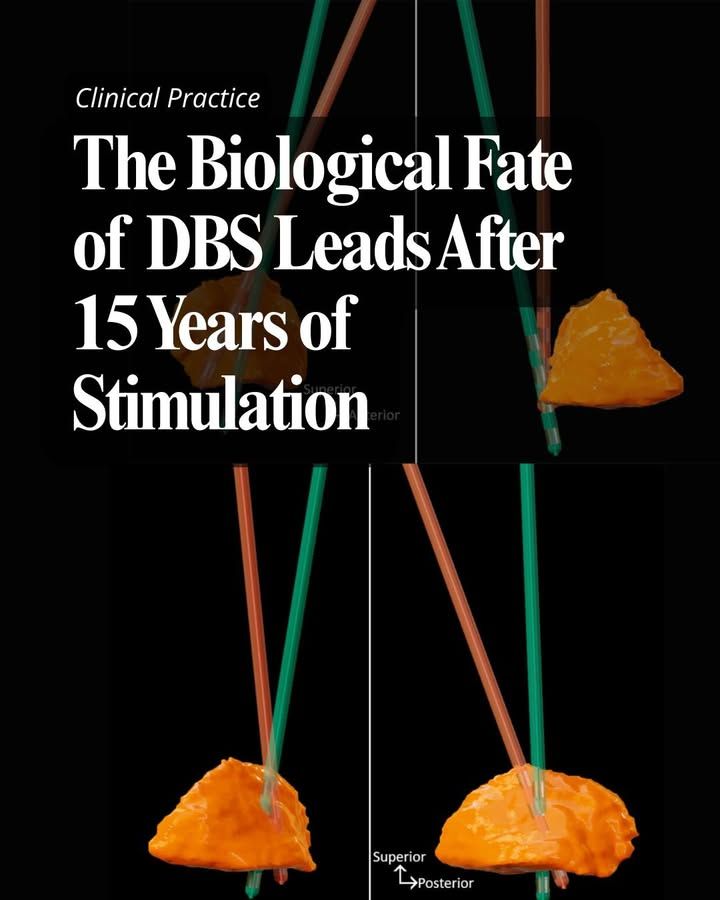
A new UF Fixel case study provides a rare look at what happens to deep brain stimulation (DBS) hardware after 15 years in the brain.🧠
Researchers examined DBS leads explanted from a patient with DYT-1 dystonia after 15 years of continuous therapy and found significant tissue encapsulation, evidence of a chronic foreign body response and visible hardware degradation.
Despite these biological and structural changes, the DBS system continued to provide therapeutic benefit for many years, and replacing the leads did not result in meaningful symptom improvement. The findings suggest that long-term DBS hardware may remain clinically effective even when substantial tissue and hardware changes are present, offering important insights for the future management of patients who may rely on DBS therapy for decades.
This work was supported by the Center of Excellence for Tyler's Hope for a Dystonia Cure. We also thank the Napier family for supporting Dr. Martinez-Nunez's fellowship, which helpe...
18
3
18
3